



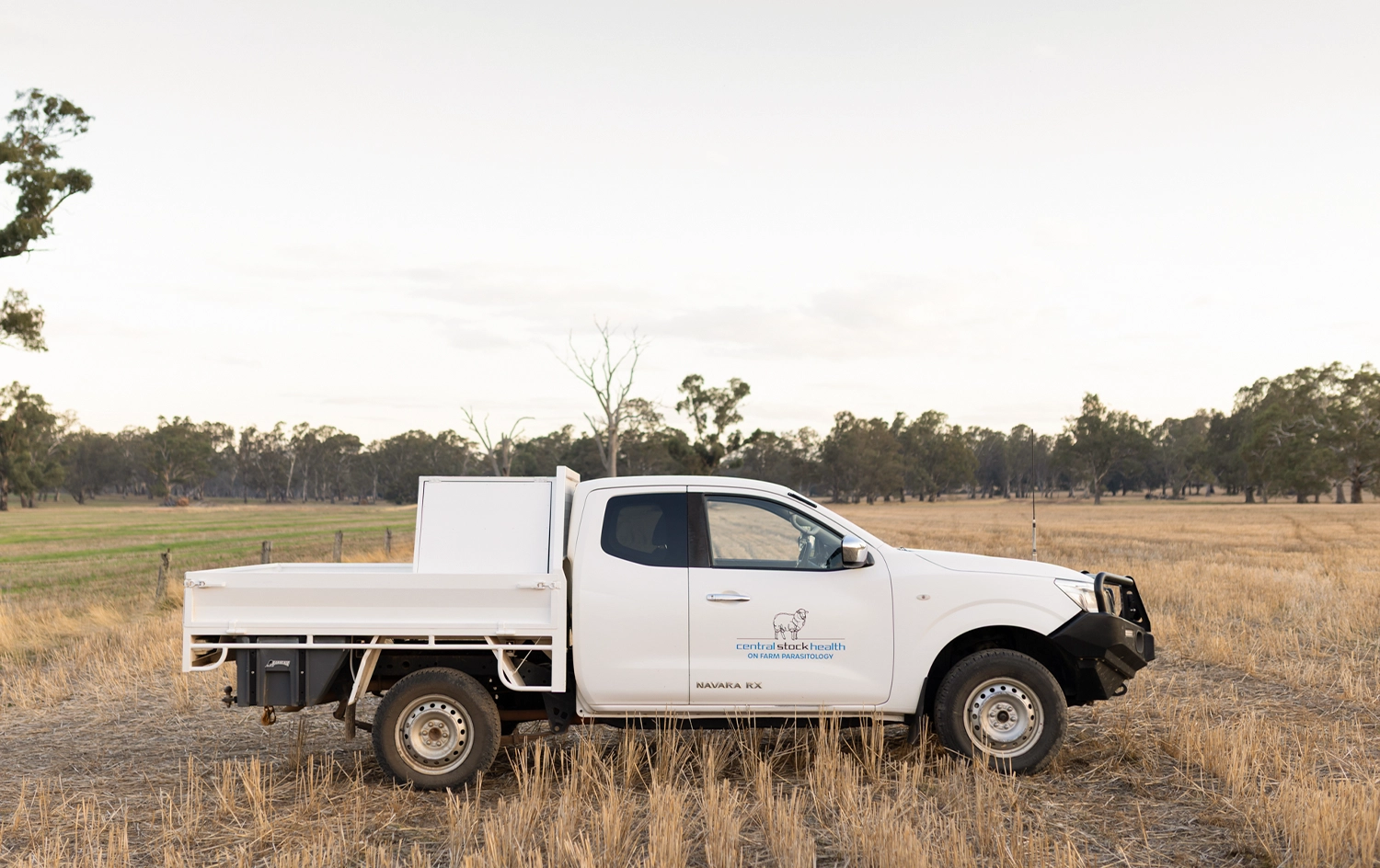
Chloe Frank runs Central Stock Health, on-farm worm egg count testing and independent drenching advice for sheep producers across Central and Western Victoria. She drives to the property, runs the tests same day, and tells producers what she actually finds. The work was already good. It just wasn't getting seen.
Word of mouth was doing the heavy lifting, a producer hears about Chloe, then looks her up to check she's real. There wasn't much there to find.
A post here and there, when Chloe could fit it in between properties, wasn't a content problem so much as a time problem. She's on the road, on-farm, running samples.
Post in gaps and the algorithm stops showing you to anyone, so even good content lands nowhere. Worm testing is seasonal too, producers need to have heard of Chloe before the window opens, not when they're already looking.
Four posts a month, built around the farming calendar rather than a generic schedule, testing windows when they mattered, real visits with real properties named. Talking-to-camera Reels became the format, Chloe explaining what she found this week, with the footage behind her.
Both platforms carried equal weight, Facebook reaching the older producers actually booking her in, Instagram building the wider profile.
Followers doubled in two and a half months, from around 1,000 to over 2,000, with Instagram reach going from 743 to 37,000 and 199,000 views across both platforms combined.
Fifteen new clients came directly from social in three months. The service didn't change. The visibility did.




Marketing for Rural Australia